

R3E | Find out everything you need to know about RaceRoom's "biggest update ever" here
-
thedoctor -
October 17, 2026 at 6:15 PM -
- Infos
- PC
-
326 Views -
0 Replies -
6 minutes
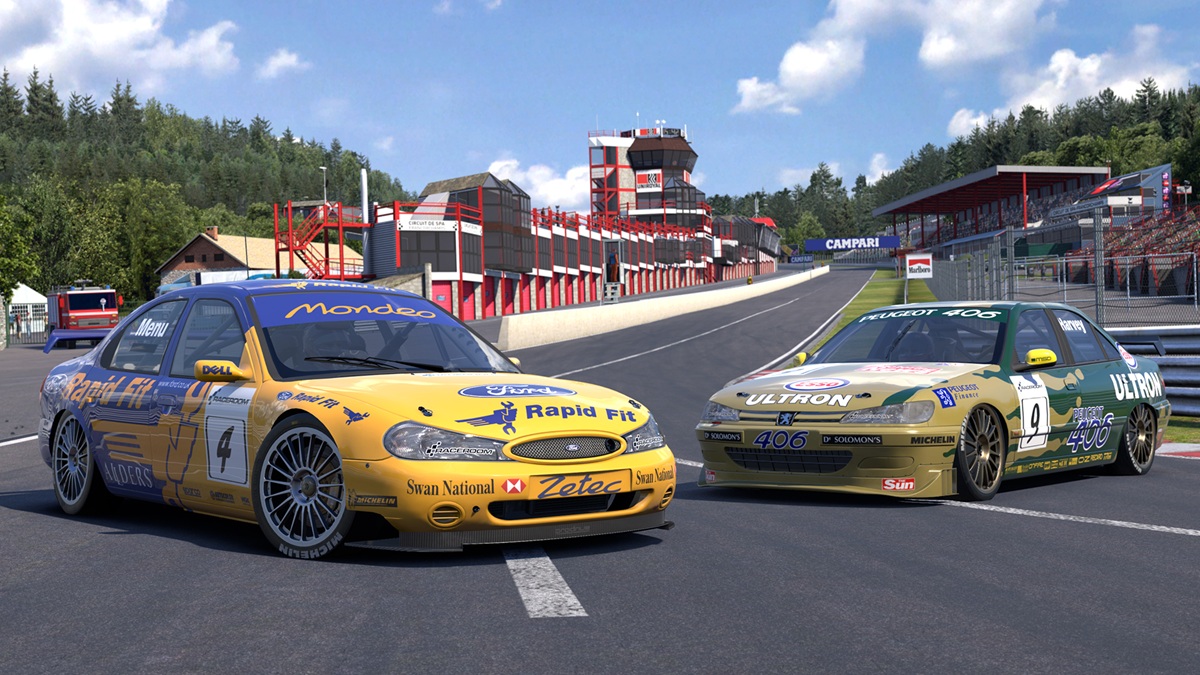
RaceRoom developer KW Studios has published details of its most extensive update to date. It includes new content, improvements for virtual reality, and a comprehensive overhaul of the user interface.
KW Studios presented the details as part of a "Grid Talk" vlog on RaceRoom's YouTube channel. Jean-François Chardon, studio director at KW, and Christian Wacker-Baur, head of strategy and sales, explained the planned improvements. The update is scheduled for release on October 20.
As expected, the package, referred to as the "Historic Update 2026," focuses on historic cars and racetracks. However, the technical changes taking place behind the scenes are likely to be particularly important for the future of the simulation. In addition, RaceRoom will host an extensive live presentation of the update on stage at the SimRacing Expo Frankfurt. Tickets are still available.
New Cars
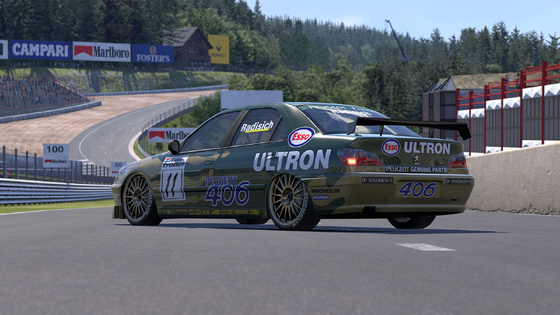
Peugeot 406 Super Touring 1998
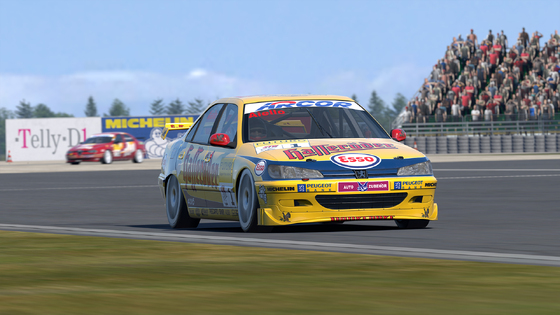
The 1998 Peugeot 406, which was already announced alongside the Ford Mondeo presented below, had a varied career during the Super Touring era.
Due to limited investment in the works team in Britain, success in the BTCC was difficult to achieve. In the German STW Championship, however, the 406 enjoyed considerable success. Laurent Aïello regularly battled at the front against the works teams from Audi, BMW, and Opel.
The Frenchman won the title in 1997 and finished runner-up in the 1998 car. Livery designs from the BTCC, STW, and the Championnat de France de Supertourisme are included, including the gold-and-green Esso Ultron livery from the BTCC.
Ford Mondeo Super Touring
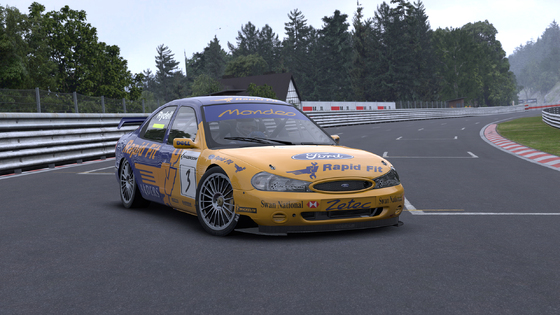
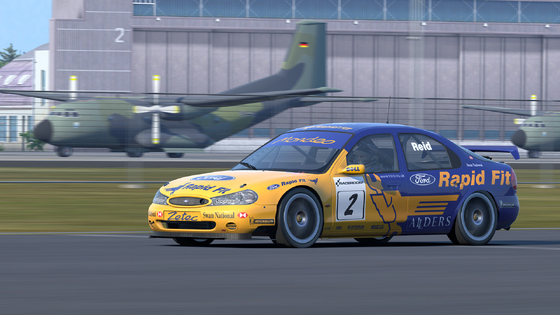
The 1999 Ford Mondeo was the predecessor to what was probably the most highly developed Super Touring car. The Prodrive-developed BTCC front-running team of Anthony Reid, Alain Menu, and Rickard Rydell dominated the 2000 championship, shortly before the Super Touring era ended in Britain. This was made possible by an exceptionally high budget of around 15 million pounds.
Reid and Menu's 1999 car was less successful, but still achieved several podium finishes and a win at Knockhill. The liveries come from the 1998 and 2000 seasons, which is why Nigel Mansell, Will Hoy, and Rydell are also represented. Particularly noteworthy is the distinctive V6 sound, which is also included.
With the Mondeo and the 406, RaceRoom's Super Touring class will comprise ten models in the future. They also include the Alfa Romeo 156, Audi A4, BMW 320i E36, Honda Accord, Renault Laguna, Volvo 850, Volvo S40, and Opel Vectra.
Abarth 1000 TCR
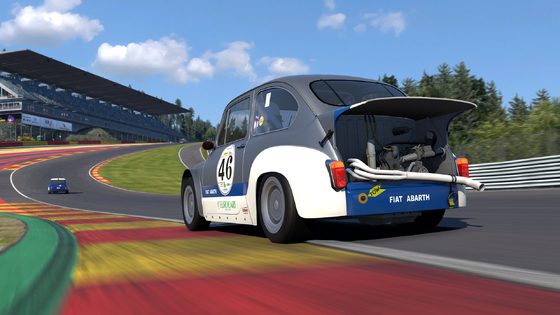
The new car is indeed the Abarth 1000 TCR. It joins the already included NSU TTS and Volkswagen Scirocco in the growing Group 2 class.
Its most striking feature is not the combination of a rear-mounted engine and rear-wheel drive, but the permanently open hood. This apparently generated a certain amount of downforce while also helping to reduce the exceptionally high engine temperatures.
Mini Cooper S Mk3
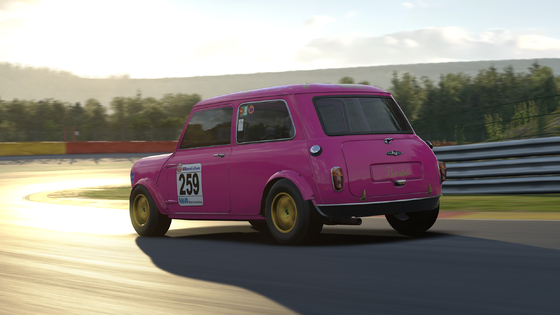
The Mini Cooper S hardly needs an extensive introduction, but it should nevertheless be mentioned here.
Production of the third generation began in 1970. The model is a further development of the classic design by Sir Alec Issigonis. With front-wheel drive and a four-cylinder engine displacing 1,275 cm³, the compact Mini was regularly able to challenge cars from significantly higher performance classes in international motorsport – especially in difficult weather conditions.
This car will also be assigned to Group 2 in RaceRoom.
New Racetracks
Circuit de Spa-Francorchamps 1995
The 1995 version of Circuit de Spa-Francorchamps includes both the Grand Prix and long-course configurations. The latter is designed for grids of up to 99 cars.
Aside from the earlier "Bus Stop" chicane, the historic track resembles the current configuration. However, its smaller run-off areas leave significantly less room for driving errors and it features more guardrails.
Laguna Seca Historic
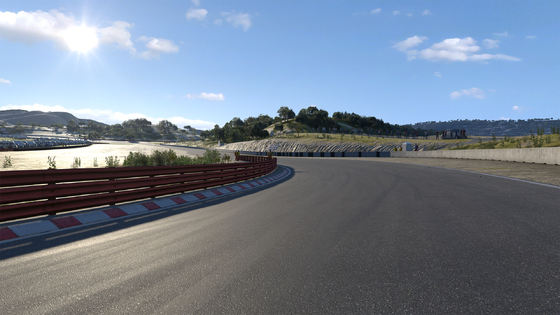
RaceRoom already features the modern layout of Laguna Seca. Following a temporary delay in licensing, KW Studios is now also adding a historic configuration from the 1980s.
The older version is likely to be more challenging. The lap begins with a fast section that climbs uphill to the "Corkscrew" corner, before the track follows a layout familiar to motorsport fans from the modern version.
Fliegerhorst Wunstorf
Fliegerhorst Wunstorf is a classic German airfield circuit that hosted DTM and STW races in the 1980s and 1990s.
Located at Wunstorf Air Base, the circuit bears visual and driving similarities to the track in Diepholz, which is already included in RaceRoom. Races were held there between 1964 and 1998. On the otherwise flat and clearly laid-out circuit, bumps and curbs present the biggest challenges.
Glasbachrennen
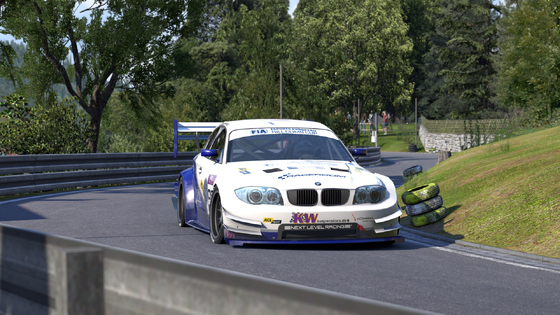
The German hill climb course Glasbachrennen will also be integrated into the simulator, offering an alternative point-to-point challenge.
The 5.3-kilometer course runs through Bad Liebenstein and was most recently used in the FIA Esports European Hill Climb Cup in Luxembourg. It is also part of the real FIA European Hill Climb Championship.
Technical Changes
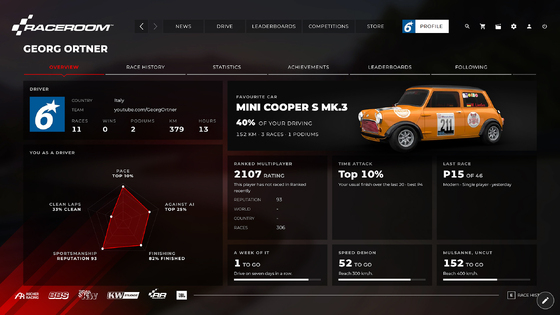
With the update announced for October 20, RaceRoom players will receive a revamped user interface. The game menus are intended to be clearer and more intuitive. Since the previous system was often prone to errors after updates, the new version should be considerably more stable. In the future, the user interface can also be operated with a gamepad.
Force feedback has also been adjusted. KW Studios has revised the simulation's power steering system for this purpose. In addition, loading times have been shortened because the AI physics calculations are now distributed across multiple CPU cores. VR performance also benefits from the additional support for OpenXR.
Other new features include a manual procedure for rolling starts and the return of detailed driver statistics. The first level of a "RaceRoom Achievements" system will also be introduced.
Improvements to Force Feedback, Handling, and Physics
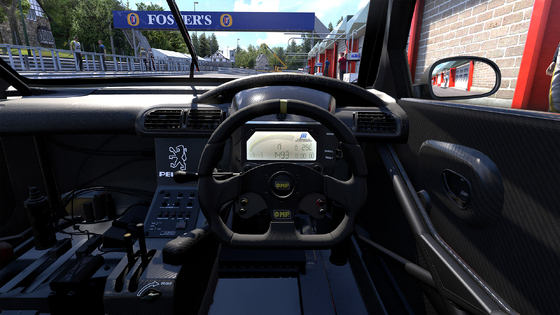
The simulation's tire contact model has been revised. This should make the behavior when driving over curbs more predictable and provide more precise force feedback responses. Further changes have also been made to the technical foundation so that the physics update rate of 400 Hz can be maintained even with larger AI grids.
Communication with the steering wheel has also been simplified. In the future, only one DirectInput effect will be used for the steering wheel, bringing RaceRoom in this area in line with many competing products.
The simulation's pronounced gyro effect has also been recalculated. This takes into account motor-driven hydraulic, electro-hydraulic, and fully electric power steering systems. Various types of steering racks are also simulated – from worm gears to modern racing systems.
After the update is released, a slider for gyro damping will also be available. This setting strengthens the existing gyroscopic stabilization effect and is intended to reduce oscillations on straights.
Editorial information
Sources

Related Articles
July
31
2026
Jul


July
28
2026
Jul
- Ankündigung
- PC
R3E | RaceRoom to introduce the Nürburgring Nordschleife in its 2026 specification in the summer update
July
27
2026
Jul